Why More Enterprises Are Using Third-Party Maintenance (TPM) Instead of OEM Support
Engineering considerations for extending infrastructure lifecycles
Author: Steve McEvoy, Director of Services – Axiom Maintenance Services (AMS)
What Is Third-Party Maintenance (TPM)?
Third-party maintenance (TPM) is infrastructure support provided by an independent service organization rather than the original equipment manufacturer (OEM).
These support programs typically include:
- replacement hardware components
- engineering-level technical support
- spare parts logistics
- post-warranty infrastructure support
- infrastructure lifecycle extension services
Organizations often evaluate TPM strategies when OEM maintenance programs expire but existing infrastructure continues to meet operational and workload requirements.
In enterprise environments, TPM is commonly used to support:
Many organizations adopt TPM strategies for infrastructure platforms from manufacturers such as:
- Cisco
- Dell EMC
- HPE
- IBM
- Lenovo
- NetApp
- Juniper Networks
Why Enterprise Infrastructure Often Outlives OEM Support
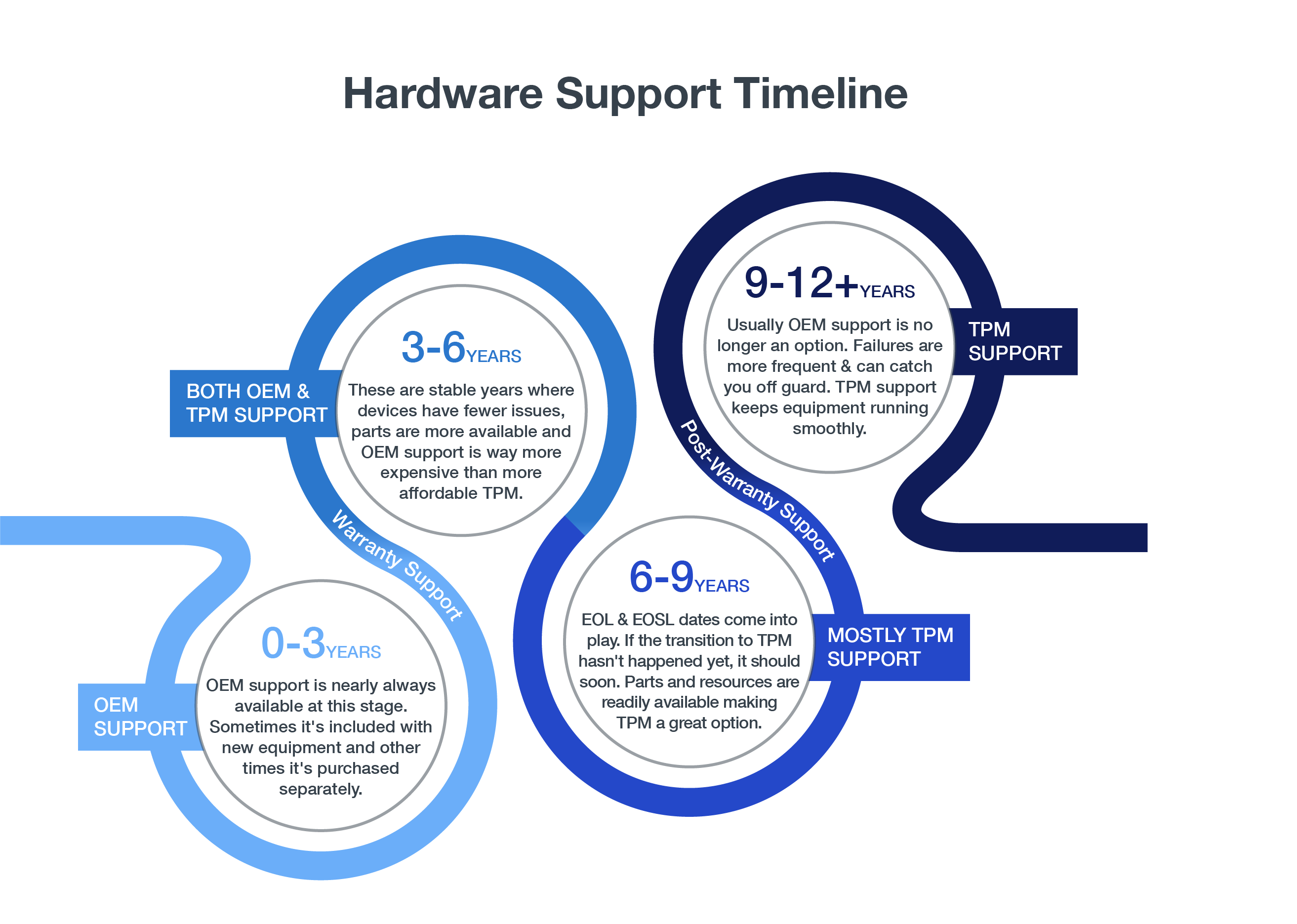
Enterprise hardware is designed to operate reliably for many years in production environments. However, OEM support programs are typically structured around vendor product lifecycle management rather than the actual operational lifespan of the infrastructure itself.
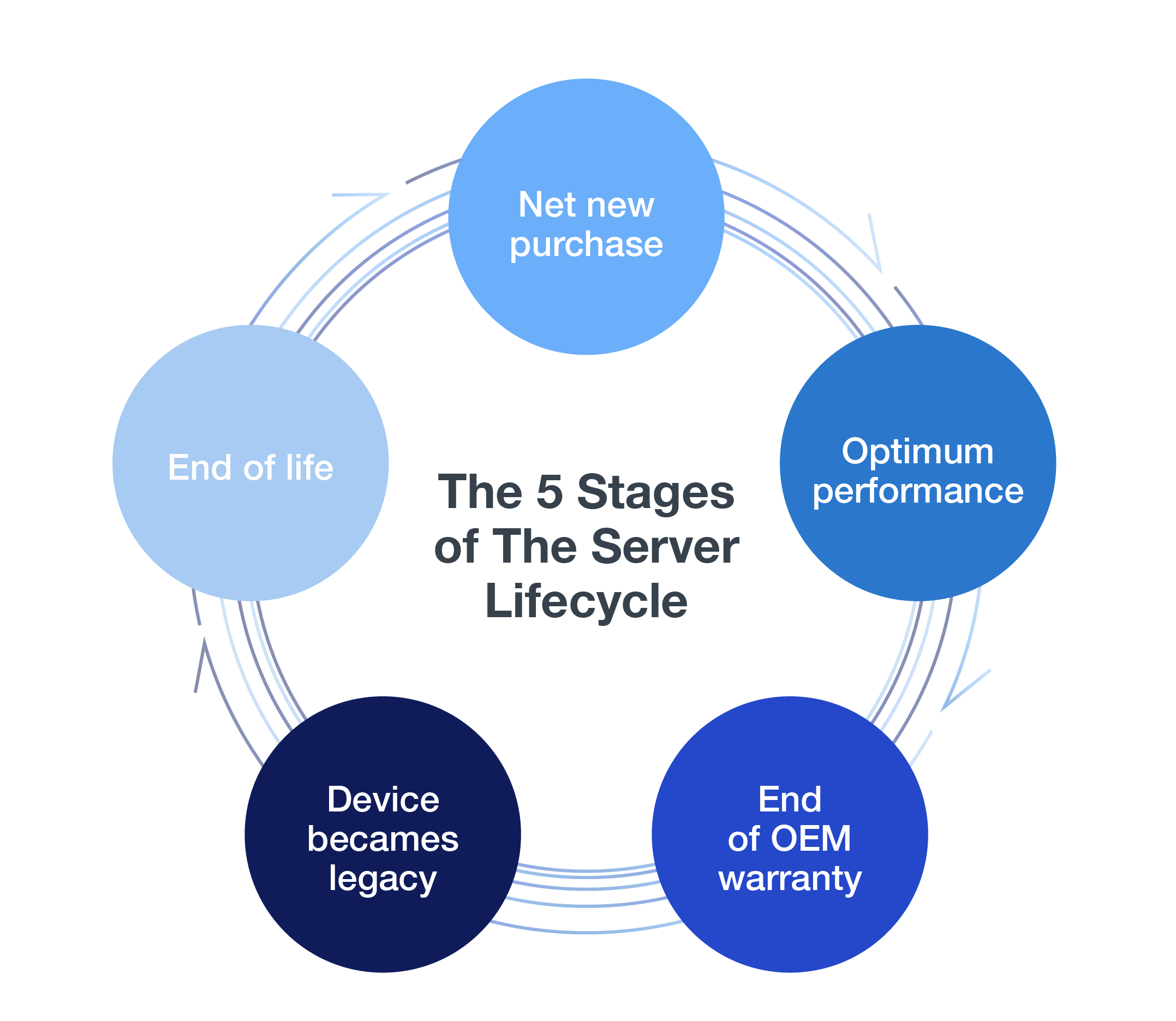
Most enterprise hardware vendors follow lifecycle stages such as:
- product launch and general availability
- end-of-sale announcements
- end of standard manufacturer support
- end-of-life (EOL) milestones
When infrastructure reaches these milestones, organizations must determine whether to:
- refresh the platform
- migrate workloads
- virtualize applications
- extend the life of existing infrastructure
In many cases, the hardware itself remains fully functional and operationally stable. The lifecycle milestone reflects a vendor support policy change — not necessarily a hardware reliability limitation.
TPM vs OEM Support
Organizations evaluating infrastructure support strategies often compare TPM programs against traditional OEM maintenance contracts.
OEM support is commonly aligned with:
- hardware refresh cycles
- product lifecycle timelines
- vendor modernization initiatives
TPM programs are typically evaluated when organizations want to:
- extend infrastructure lifecycle timelines
- support stable production environments
- reduce unnecessary infrastructure churn
- maintain operational continuity
- align refresh decisions with broader business priorities
For many enterprise environments, the decision is not simply about reducing maintenance costs. It is often part of a larger infrastructure lifecycle management strategy.
When TPM Becomes a Logical Infrastructure Strategy
Infrastructure Refresh Cycles Do Not Align With Business Priorities
Infrastructure modernization initiatives are frequently tied to:
OEM support is commonly aligned with:
- data center expansion
- cloud migration planning
- virtualization projects
- application modernization efforts
- budget allocation cycles
If OEM support expires before those initiatives occur, TPM can provide operational continuity while allowing organizations to align refresh timelines with broader business objectives.
Capital Efficiency and Infrastructure ROI
Enterprise infrastructure represents a significant capital investment.
Extending the operational life of stable infrastructure can help organizations:
- maximize infrastructure ROI
- avoid premature capital expenditures
- allocate budgets toward modernization initiatives with greater business impact
For many environments, replacing fully functional hardware solely because OEM support has expired may not align with operational or financial priorities.
Infrastructure Remains Stable After OEM Support Ends
Many enterprise systems continue operating reliably years after official manufacturer support programs end.
This is particularly common in:
- secondary production environments
- backup infrastructure
- disaster recovery systems
- test and development environments
- stable application platforms with predictable workloads
TPM programs can help organizations maintain operational reliability without requiring immediate hardware replacement.
How TPM Fits Into Infrastructure Lifecycle Planning
Large enterprises often manage infrastructure across multiple lifecycle stages simultaneously.
A typical lifecycle strategy may include:
- new infrastructure under OEM support
- mid-lifecycle systems supporting primary workloads
- mature platforms supporting secondary or legacy environments
Third-party maintenance programs are commonly used during the later stages of this lifecycle model.
This approach allows organizations to:
- maintain operational continuity
- reduce unnecessary infrastructure churn
- extend useful hardware life
- plan modernization initiatives on their own timelines
Is Third-Party Maintenance Reliable for Enterprise Infrastructure?
Many organizations successfully operate enterprise servers, storage systems, and networking platforms using TPM support models - particularly when infrastructure platforms are mature, stable, and widely deployed.
The effectiveness of a TPM strategy often depends on factors such as:
- hardware platform maturity
- parts availability
- engineering expertise
- operational requirements
- workload criticality
As a result, organizations typically evaluate TPM providers based on:
- technical capabilities
- response models
- logistics infrastructure
- engineering resources
- enterprise infrastructure experience
Common Enterprise Platforms Supported Through TPM
Third-party maintenance programs are commonly used to support:
Organizations frequently evaluate TPM support for:
- post-warranty environments
- end-of-life (EOL) infrastructure
- mature production systems
- secondary data center infrastructure
- legacy application platforms
Frequently Asked Questions About Third-Party Maintenance
Is third-party maintenance cheaper than OEM support?
Organizations often evaluate TPM programs as a way to reduce post-warranty maintenance costs while continuing to support stable infrastructure platforms. However, TPM decisions are frequently based on broader infrastructure lifecycle planning considerations rather than cost alone.
When should enterprises switch to TPM?
Many organizations evaluate TPM when:
- OEM support expires
- infrastructure remains operationally stable
- hardware refresh projects are delayed
- cloud migration initiatives are still in progress
- production workloads do not require immediate modernization
Can TPM support mission-critical infrastructure?
Many enterprises successfully operate mission-critical environments using TPM support models, particularly for mature and stable infrastructure platforms. Support requirements are typically evaluated based on workload criticality, operational risk, and infrastructure maturity.
What happens after OEM end-of-life?
After OEM end-of-life milestones, organizations often evaluate whether to:
- refresh infrastructure
- migrate workloads
- virtualize applications
- transition to TPM support
- extend operational infrastructure lifecycles
Is TPM reliable for Cisco, Dell, or HPE infrastructure?
Many enterprises use TPM programs to support Cisco, Dell EMC, HPE, IBM, NetApp, and other enterprise infrastructure platforms after OEM maintenance programs expire. Reliability often depends on provider engineering expertise, parts availability, logistics capabilities, and operational support models.
How Axiom Maintenance Services (AMS) Supports Extended Infrastructure Lifecycles
Axiom Maintenance Services (AMS) provides support for enterprise infrastructure throughout extended lifecycle phases, including after OEM maintenance programs expire.
AMS supports:
- enterprise servers
- storage arrays
- network switches
- production infrastructure environments
Services include:
- replacement hardware components
- engineering-level troubleshooting support
- spare parts logistics and inventory management
- infrastructure lifecycle extension planning
Rather than focusing exclusively on hardware refresh cycles, AMS helps organizations maintain operational stability while planning infrastructure modernization initiatives on timelines aligned with business requirements.
Evaluate Your Post-Warranty Infrastructure Strategy
OEM support programs are structured around vendor product lifecycles. Infrastructure operational requirements often follow a different timeline.
For organizations operating stable, mature platforms, third-party maintenance can provide a practical strategy for:
- extending infrastructure lifecycles
- maintaining operational continuity
- supporting post-warranty environments
- reducing unnecessary infrastructure disruption
- aligning modernization initiatives with business priorities
AMS helps organizations evaluate infrastructure support strategies for servers, storage, and networking environments operating beyond traditional OEM maintenance windows.